The Complete History of the Classic Mini (1956–2000)
A British Icon from Conception to Legacy
Few cars have achieved the legendary status of the Classic Mini. Conceived during a time of crisis, engineered with revolutionary ideas, and celebrated across the world for its undeniable charm, the Mini remains one of the most influential vehicles ever produced. Over its 41-year production run, it evolved from a pragmatic economy car into a cultural symbol, a motorsport champion, and ultimately, a timeless design icon.
The story of the Mini begins in 1956, when the Suez Crisis caused severe fuel shortages throughout Europe. As petrol prices soared, motorists sought smaller, more efficient cars. The British Motor Corporation (BMC), under chairman Leonard Lord, saw its market share threatened by a wave of tiny imported microcars such as the Fiat 500, Vespa 400, and BMW Isetta. Lord wanted a British alternative—one that was practical, affordable, and considerably more refined.
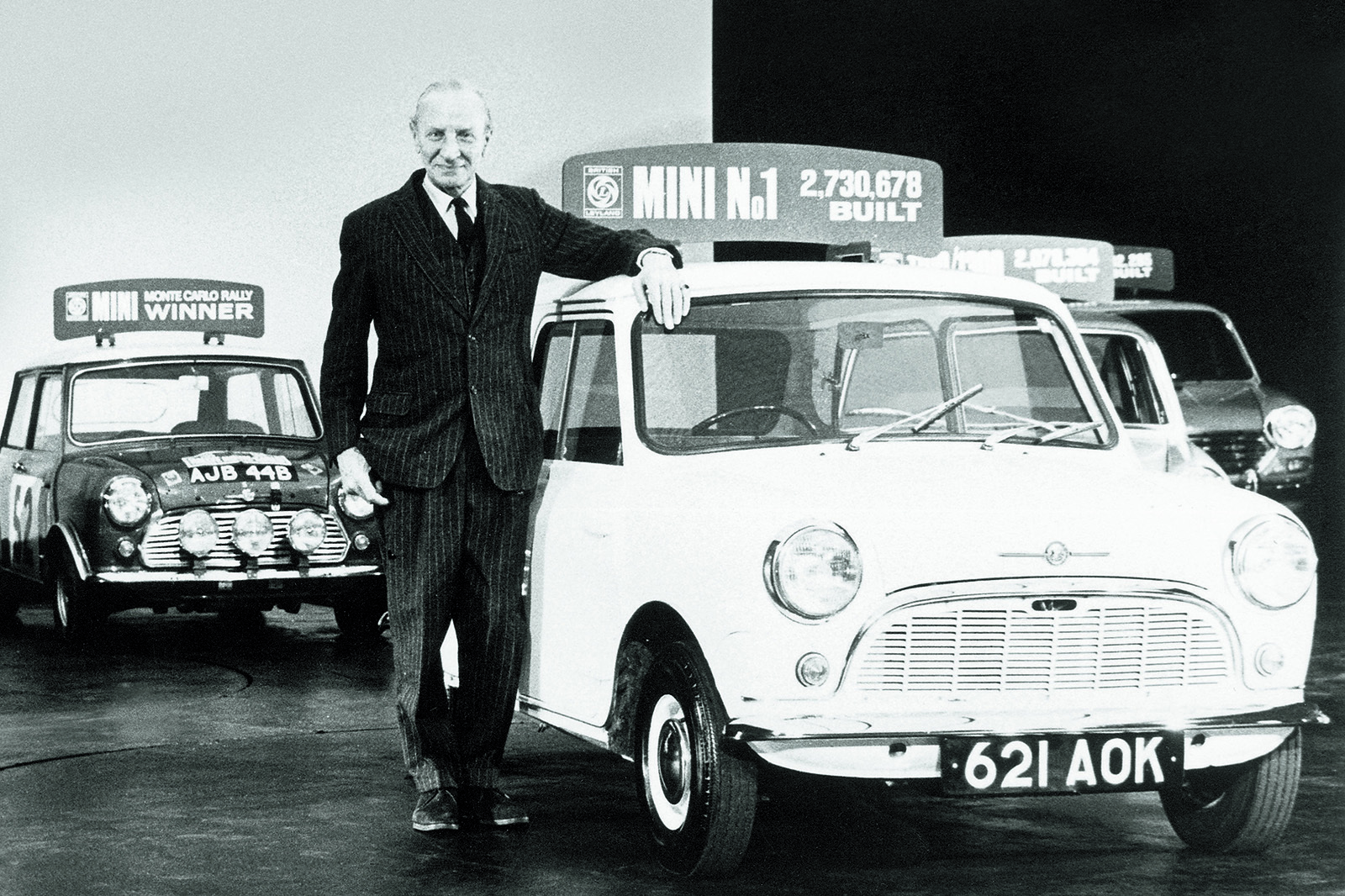
To spearhead this effort, BMC turned to its most respected engineer: Sir Alec Issigonis. Known for his ingenuity and unconventional thinking, Issigonis demanded a free hand to create a car unlike anything before it. His goal was simple: fit four adults comfortably in the smallest footprint possible.
Issigonis designed a tiny yet spacious vehicle by turning engineering conventions on their head. He mounted the engine transversely, used front-wheel drive, and placed the wheels at the extreme corners of the car. This radical setup allowed 80% of the car’s footprint to be dedicated to passengers and cargo. Prototypes were secretly tested under code names like ADO15 and “Orange Box.”
By 1958, development was complete, and BMC prepared for a groundbreaking launch.
On 26 August 1959, BMC unveiled the world’s newest small car under two names:
- Austin Seven
- Morris Mini-Minor
Though marketed under different brands, the cars were mechanically identical. Almost instantly, the public embraced them. The car’s simple appearance—small wheels, sliding windows, external hinges—hid a brilliantly engineered platform with exceptional handling and surprising interior space.
Priced at just £497, the Mini was not just cheap; it felt modern, clever, and fun. Newspapers praised its road-holding and spirited personality, traits that would become synonymous with the Mini brand.
The Mini’s motorsport journey began when racing engineer John Cooper, a close friend of Issigonis, recognized the car’s inherent racing potential. Despite initial hesitation, BMC approved the project—and the Mini Cooper debuted in 1961.
The upgrades were modest but transformative:
- A more powerful engine
- Front disc brakes
- Improved gearbox ratios
Two years later, the Mini Cooper S arrived with even more power. It dominated international rally racing, famously winning the Monte Carlo Rally in 1964, 1965, and 1967. The controversial 1966 disqualification—on a technical lighting rule—only enhanced its underdog legend.
By the late 1960s, the Mini was no longer merely an economy car. It was a motorsport icon.
During the Swinging Sixties, the Mini became a fashion statement. Its compact, playful design appealed to style-conscious buyers, including celebrities like The Beatles, Steve McQueen, Bridget Bardot, and Peter Sellers.
It was customizable, relatively cheap, and perfect for the narrow streets of European cities. This combination of practicality and personality made it a cultural marvel.
BMC exported the Mini around the world, and production was licensed in:
- Australia
- Belgium
- Italy
- Spain
- South Africa
- New Zealand
- Venezuela
New variants arrived, including the Mini Traveller, Countryman, and later the Clubman and 1275 GT. British Leyland took control of BMC in 1968, and the Mini transitioned into being a brand in its own right.
Despite growing competition and internal corporate struggles, the Mini’s popularity endured.
By the 1980s, the original Mini was aging. It now competed with modern small hatchbacks like the Ford Fiesta and Volkswagen Polo. Yet it refused to fade away.
British Leyland (later renamed Rover Group) continued refreshing the model:
- Improved equipment levels
- New trim packages
- More reliable engines
- Better safety features
In 1986, the Mini surpassed 5 million units produced, symbolizing its continuing relevance.
The late 1980s marked a nostalgic revival. Special-edition models, such as the Mini 25 and Mini 30, rekindled the public’s love for the original.
The 1990s saw a resurgence of Mini enthusiasm. The original Cooper returned to production in 1990 with a 1275cc engine, soon upgraded to comply with modern emissions standards through fuel injection.
The car gained:
- Catalytic converters
- Side-impact bars
- Driver airbags
- Various retro-themed special editions
In 1994, BMW purchased the Rover Group, including the Mini brand. The German manufacturer recognized the Mini’s heritage value and began development of a new, modern version of the car.
Meanwhile, the classic version approached the end of its journey. By the late 1990s, stricter safety and emissions laws made continued production impractical. Final special editions—such as the Cooper Sport 500—celebrated the Mini’s remarkable four-decade run.
On 4 October 2000, the last Classic Mini rolled off the production line at Longbridge. It was a red Mini Cooper Sport, marking the end of a remarkable 41-year manufacturing legacy.
The final tally stood at approximately 5.3 million Minis built, making it one of the most successful British cars in history.
In 2001, BMW launched the new-generation MINI, a modern reinterpretation of Issigonis’ original principles. Though larger and more powerful than the classic, it carried forward the Mini’s signature blend of charm, agility, and personality.
Yet the Classic Mini remains in a league of its own. It is celebrated by enthusiasts, preserved by collectors, and remembered as one of the most innovative automotive designs ever produced.
From its birth in the aftermath of the Suez Crisis to its triumphant motorsport victories and enduring cultural influence, the Classic Mini’s story is one of ingenuity, character, and resilience. Designed to solve a practical problem, it evolved into a worldwide icon—loved by millions and still cherished decades after production ended.
The Mini was more than a car: it was a revolution on wheels.